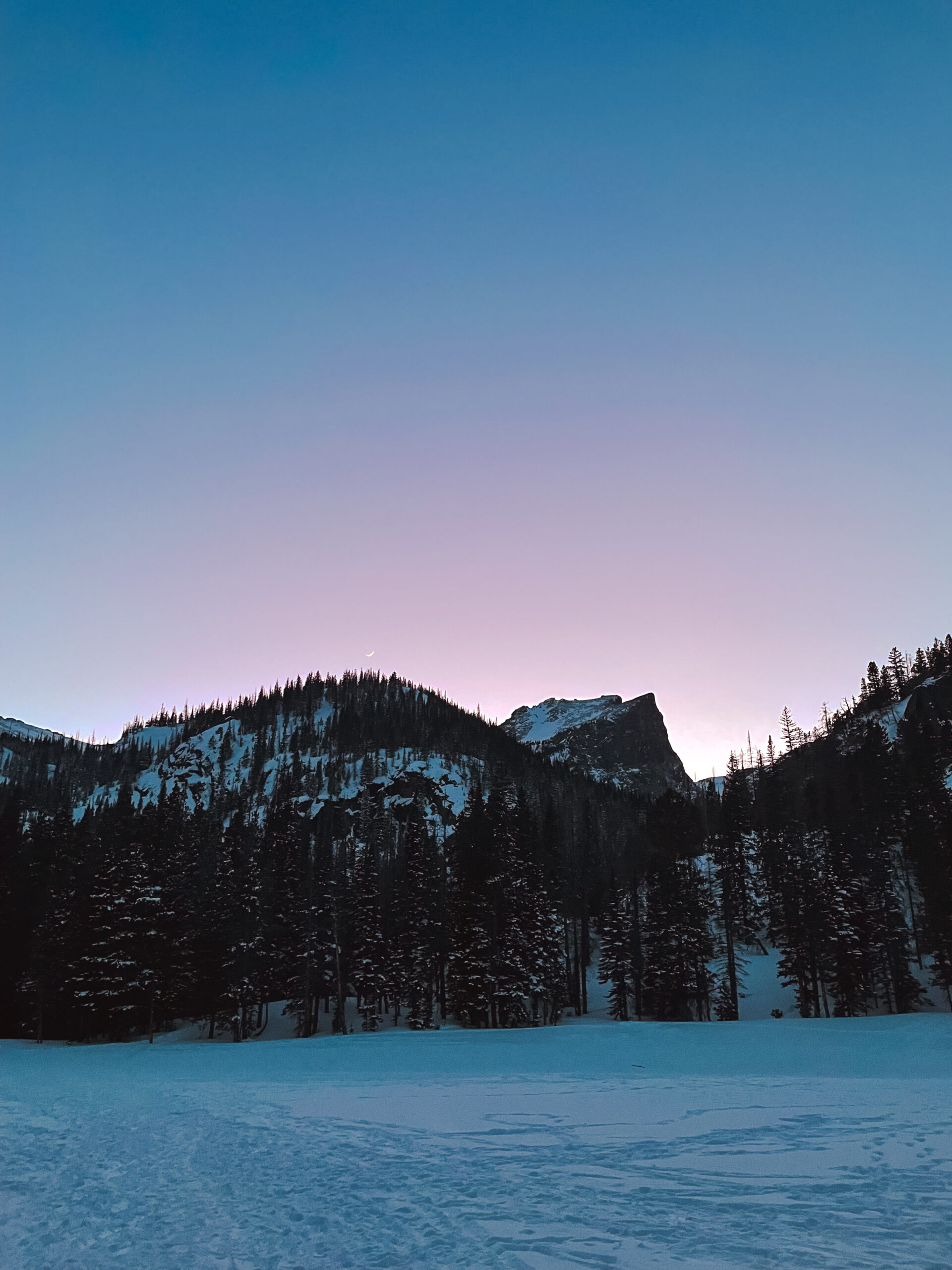

If you’re not from Colorado, visiting Rocky Mountain National Park in the winter might feel like a recipe for cold fingers and spinning tires. But with the right gear, it’s the best time of year to enjoy the mountains (trust me).
Here’s a secret Colorado locals aren’t telling you…
Winter is the best time to visit Rocky Mountain National Park.
In the peak months, the National Park is buzzing with tourists and long entry lines. But in winter, it’s just you and a handful of locals enjoying the quiet majesty of the Rockies. Sure, you’ll need to be more prepared with gear and avalanche awareness. But the tradeoff is frozen waterfalls, snow-capped peaks, and bragging that you braved the roads.
Chapters
- Is Rocky Mountain National Park Open in Winter?
- Good Reasons to Visit Rocky Mountain National Park in Winter
- Steal My Winter Gear Checklist
- Winter Safety in Rocky Mountain National Park
- Things to Do In Rocky Mountain National Park in Winter
Is Rocky Mountain National Park Open in Winter?
Yes, Rocky Mountain National Park is open in the winter months, with a few select areas closed due to snow. You won’t be able to access Trail Ridge Road or Old Fall River Road by car, but you can enjoy popular areas like the Bear Lake Corridor and Wild Basin. Of course, check current conditions and weather cameras before you go. There are occasional road closures due to extreme weather.
Good Reasons to Visit Rocky Mountain National Park in Winter
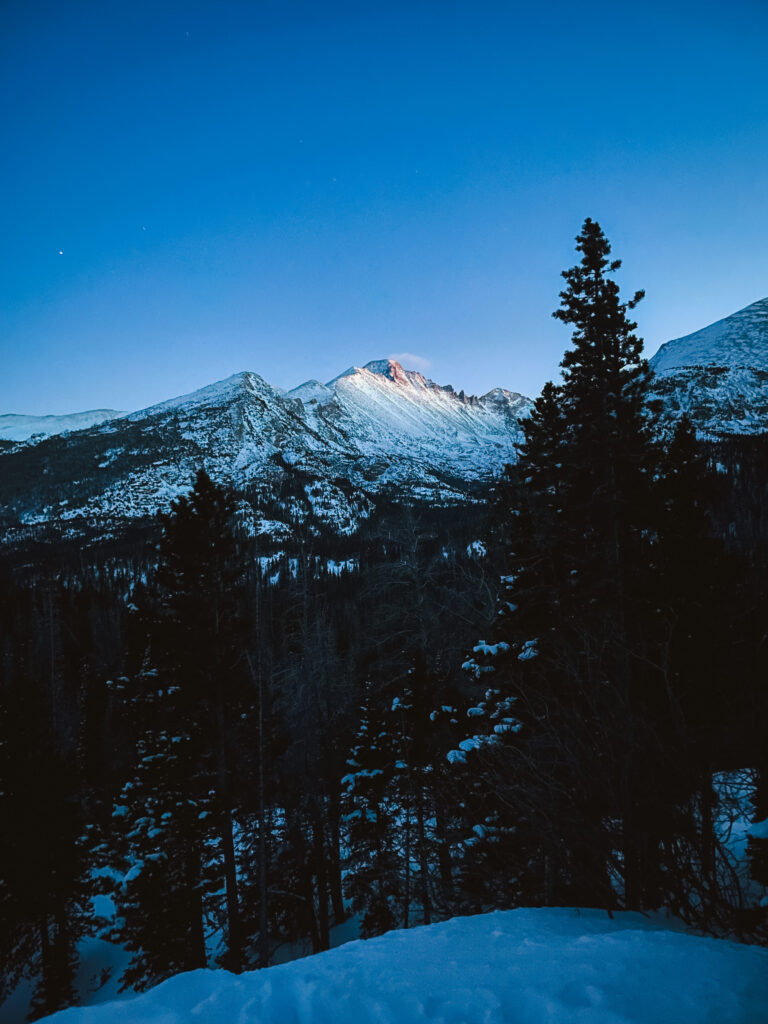
Winter at the National Park feels like something straight out of the Frozen movie. There’s glittering snow, wildlife tracks, and snow drifts blowing off the peaks. You probably don’t need convincing, but here are some benefits of visiting this time of year.
✔️No timed entry pass needed. Show up when you want and visit popular areas like the Bear Lake Corridor without a special pass.
✔️Fewer tourists. Rocky Mountain National Park is the fifth most visited National Park, welcoming over 4 million tourists every year. But most of these tourists visit during peak season (June — September). Skip the chaos and get your nature fix with quiet winter hikes.
✔️Unique winter activities. Think of this as your opportunity to discover snowshoeing, ice fishing, snowmobiling, and other winter activities. Once you catch the winter adventure bug, you’ll be planning return trips every February.
✔️Quieter wildlife encounters. You’ll see wildlife in the park any time of year, but it’s a special experience to enjoy moose, bears, elk, and big horn sheep without the crowds.
Steal My Winter Gear Checklist
If you’re from the East Coast like me, forget anything you know about winter hiking. The Rockies are a different beast entirely, with rapidly changing temperatures and high-elevation snowstorms. What’s in your backpack will decide whether you turn around at mile one or last all day in the snowy wonderland. Here’s what to bring.
✔️Top and bottom baselayer thermals
✔️Midlayer lightweight jacket or sweater
✔️Water and windproof ski pants
✔️Water and windproof ski coat
✔️Multiple layers of wool socks
✔️Multiple layers of gloves (including waterproof)
✔️Plenty of handwarmers
✔️Wool hat and a neck gaiter or buff
✔️ Waterproof boots
✔️Multiple liters of water for high altitude
✔️Electrolyte tablets or packets
✔️Plenty of snacks (you’ll need more carbs at high elevations)
✔️Headlamps with batteries (just in case)
✔️Ibuprofen for altitude headaches
✔️Spikes or snowshoes
✔️Hiking poles
Winter Safety in Rocky Mountain National Park
You need to be aware of dangerous roads, avalanche risks, and walking over frozen lakes in the winter. It’s best to be overprepared in mountain areas, where temperatures and weather conditions change without warning.
Dangerous road conditions
Even in the winter, Colorado lives up to its sunny reputation. That’s why you’re more likely to face bad road conditions at night or during a blizzard. The National Park requires you stay prepared by carrying chains or using a Four Wheel Drive vehicle.
In my experience, it’s easy to drive the popular areas with a small car as long as the weather holds. Your driver should feel confident in snowy conditions and turn around if the weather worsens. The best time to drive is typically in the morning, before afternoon storms blow in. There’s some cliffside driving, especially around the Bear Lake Corridor, and I don’t recommend driving those portions after dark. Once the sun’s gone, roads freeze fast, and you just don’t need that kind of anxiety.
Subzero temperatures
The park ranges in altitude from 8,000 feet (at the entrance) to 14,000 feet (the top of Long’s Peak), and that means drastically changing temperatures. If you’re hiking, expect the trailhead entrance to be 20 — 30 degrees warmer than the summit. Always layer up and prepare for the coldest and windiest conditions.
Avalanches
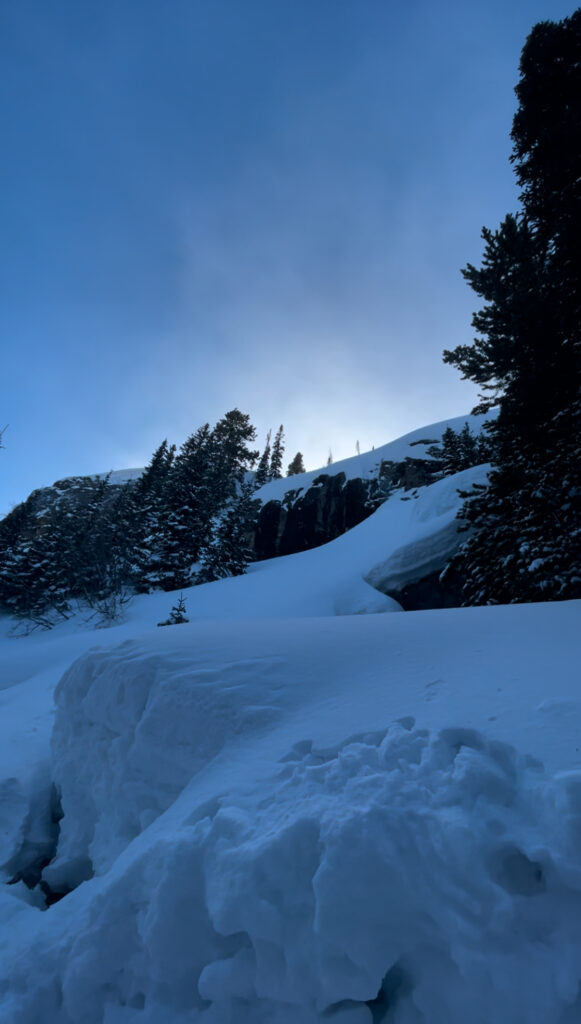
Most of the roads and easy hikes in Rocky Mountain National Park are low risk for avalanches. But if you venture to areas like Lake Haiyaha and Hallett Peak, be aware of falling snow. Travel with beacons, keep your eyes on steep slopes, and check the Colorado Avalanche Information Center before hiking. All Trails is a great resource for current trail conditions, too. Avalanches happen right after snowstorms, high wind events, and during the spring thaw, so be aware during those times, especially.
Trail conditions
Always check trail conditions before you head out for a winter hike. Hop on All Trails and read some of the most recent reviews to see what gear you need. During the winter, conditions can range anywhere from waist-deep snow to heavy mudslides. Be aware of trails where you could posthole, and pack snowshoes to avoid filling your boots with snow, especially in less-traveled areas.
Things to Do In Rocky Mountain National Park in Winter
Now that we’ve got safety and gear out of the way, prepare to fall in love with these winter activities that are best enjoyed under looming Rocky Mountain peaks.
Snowshoeing
When snowdrifts are too deep for hiking, snowshoeing becomes the easiest way to get around. Head out early in the morning to capture the immense quiet of winter in the Rockies, interrupted only by a local moose or snowshoe hare. Drink in the scent of ponderosa pine and enjoy the icy cold rivers that still run through alpine areas, even on the coldest days.
Early snow pack falls on the West side of the National Park, and popular snowshoeing trails include Chasm Falls, Alberta Falls, the Upper Beaver Meadows area, or Sky Pond (if you’re an expert). You’ll want to pick an area with plenty of snowfall (at least 6 inches) and minimal snowpack. Snowshoeing is harder than a typical hike, so plan your route accordingly and choose an easy trail to begin.
Ice skating
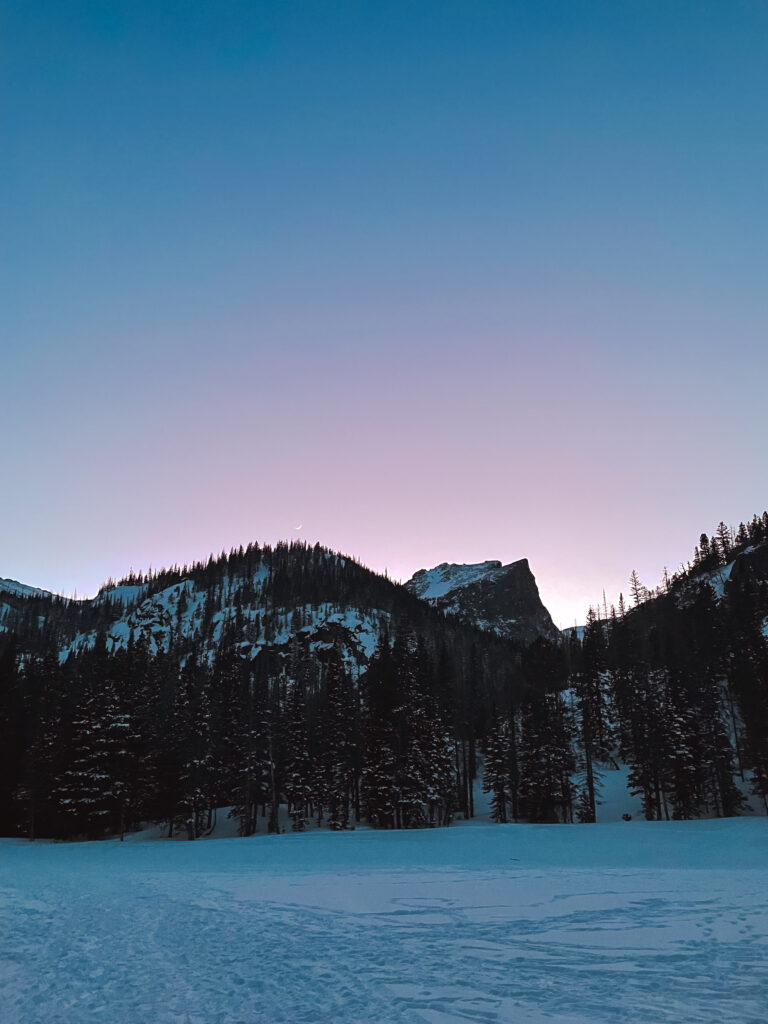
Wild ice skating is allowed on many of the National Park’s pristine glacial lakes, like Chasm Lake, Sprague Lake, Lily Lake, Dream Lake, and Lake Haiyaha. Many of these lakes have vibrant blue water and magazine-worthy mountain backdrops, so it’s the kind of experience you’ll tell your grandkids about.
That said, it’s best to go in the height of winter, after multiple days of subzero temperatures are recorded. The higher altitude lakes are generally safest, although you should always check the ice conditions before skating. You’ll need to bring your own skates and hike up to your preferred lake. Take tons of videos (obviously) and don’t skate alone.
If you’re from a warmer state and can’t imagine skating on wild ice, hike up to one of the lakes early in the morning and watch some local ice skaters. That experience alone is worth the adventure, and you may eventually feel brave enough to join them. By the height of a cold winter, most of these lakes are safe enough to drive your car over. If you find friendly locals, ask them to show you where the ice has been auger tested.
Ice fishing
The National Park offers free ice fishing lessons at Sprague Lake on Fridays and Sundays at 10:00 am. You don’t need fishing gear or experience; simply bundle up and head out to the lake to see if the fish will bite. Lessons are hosted between January and March, and the rangers are super informed about ice conditions and safety.
You can also go on a solo ice fishing adventure, just make sure you have a Colorado fishing license, auger, gear, and you’ve brushed up on local regulations. Some ponds are catch-and-release, while others allow you to keep your haul.
Winter hiking
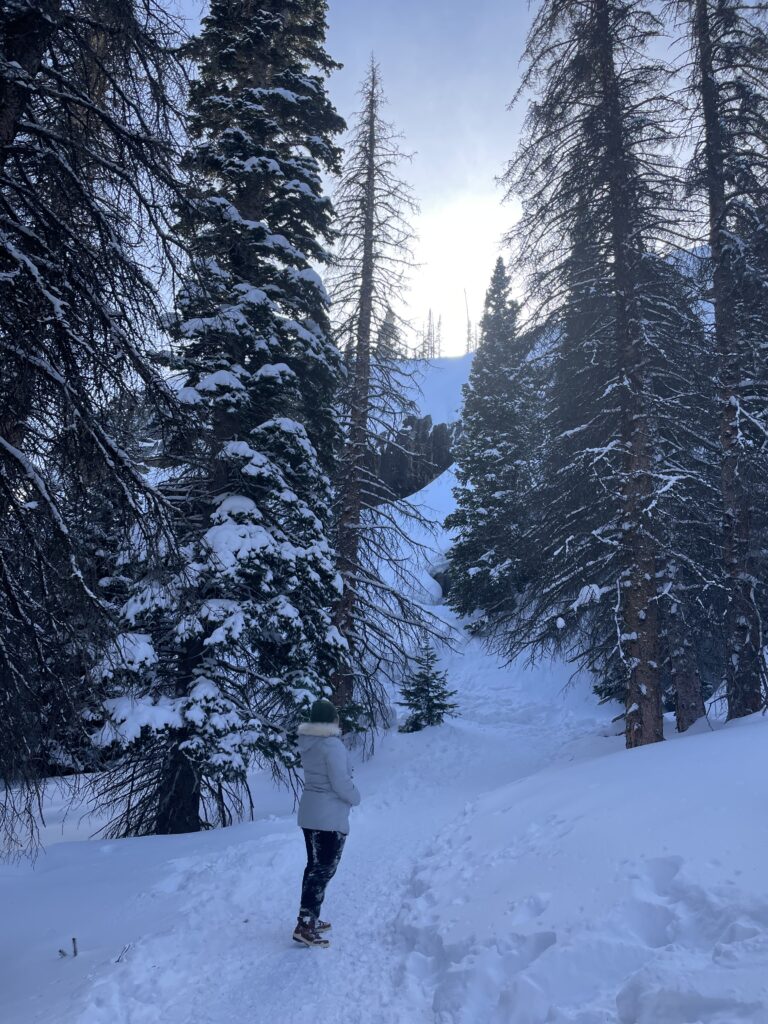
There are only a few select places you can hike instead of snowshoeing during the winter. These are the popular areas, like the Bear Lake Corridor, that get enough foot traffic for significant snowpack. Even with multiple feet of snow, these areas are so packed down that you won’t need special gear. That said, you should always have boots with good traction, and pack spikes for slippery areas. The farther you go down these hikes, the less packed they become. So, if you plan to go a few miles one way, you may want to bring snowshoes.
Sledding
Inside the National Park, Hidden Valley Sledding Hill is the only place where snow tubes and sleds are allowed. When you arrive, check the signs to make sure you’re always within the sledding boundaries. This helps the park protect its wildlife and delicate ecosystem, and keeps you safe as you fly down the snow banks at breakneck speed. This is a traditional sledding hill, where families walk their snow tubes and sleds up the hill before riding down again. Pack warm and grab hot cups of cocoa at the Rocky Mountain Chocolate Factory on your way back through Estes Park.
Cross-country skiing
In the wintertime, cross-country skiing is the National Park’s main event. Skiers from all around the world take on the glittering fresh powder that’s so unique to the Rockies and lose themselves in the mountains. If you’ve never skied in the back country, keep in mind that it’s super physically demanding. You may want to start on an easier trail or find a friend who’s more experienced to share tips.
In Rocky Mountain National Park, there are plenty of winter trails. They aren’t groomed, but maintained by fellow skiers. You can rent a pair of skis right outside the National Park at Outdoor World (East entrance) or Grand Lake Nordic Center (West entrance). Check with local shop owners or stop at the visitor’s center to see which trails have the best powder. Usually, it’s the West side trails, since snow tends to fall there earlier in the year. Try some of the popular trails, like Trail Ridge Road (closed to cars in the winter), Glacier Gorge, or the Wild Basin area.
If you see a cross-country ski trail while you’re out hiking, be mindful not to step on it. Not only could you be run over by a fast skier zipping through the area, but it also creates bumps and divots of snow melt that make trails harder to maintain.
Wildlife watching
If you’re the kind of person who wants to meander through car pull-off spots and enjoy cliffside views from your car window (hot coffee in hand), the National Park still has so much to offer. Even in the winter, there are plenty of roadside stops where you can take pictures and catch a wildlife crossing. The best spots are typically marsh and grass flatlands, especially for moose or elk sightings. If you’re driving through the park and see someone pulled over, peek over their shoulder to see if they’ve spotted something exciting.
Snowmobiling
One of the easiest ways to explore the alpine backcountry, snowmobiling is one of my personal favorite activities. You can cover way more ground than on foot and get to wilderness areas that are impossible to access in your car. It’s the best of both worlds. Snowmobiling is restricted in Rocky Mountain National Park, but it’s a popular activity in Grand Lake, right outside the park. You’ll still get awesome views and an unreal experience. Find a local snowmobile rental company and choose from over 500 trails, where you get to join the wilderness from your sled.
Letters to explore
Little comforts for your busy life