

Here’s everything you need to know (and pack) when you’re traveling to Europe for the first time. From phone service to travel adapters and credit cards, these tips and tricks will fool your friends into believing this isn’t your first time across the pond.
Before my first trip to Europe, I spent hours scrolling through travel blogs and polling friends about their experiences overseas — just to make sure I didn’t miss a beat. Going to another country for the first time is so intimidating, and for me, the fear of the unknown almost held me back from booking my ticket.
But after growing up in a family that travels, I knew expanding my horizons with new cultures and landscapes would be life-changing. I’m so glad I was brave enough to go the first time — because it’s led to an almost yearly habit of checking new countries off my bucket list. But as a letter to my past self (and also to you), here’s everything you need to know about traveling to Europe for the first time.
Chapters
- Things You Need to Know Before Traveling to Europe for the First Time
- Outlets and Travel Adaptors
- Phone Service
- Must-Haves for Overnight Flights
- Currency Exchange Fees and Options
- The Best Credit Cards to Use in Europe
- What Safety Concerns will You Face in Europe?
- Tips for Learning the Language
- Apps and Maps You Need to Download
- Using the Restroom in Europe
- International Flights
- Steal My European Packing List
Things You Need to Know Before Traveling to Europe for the First Time
Let’s cover the basics. Any time you travel overseas, there will be inconveniences and hiccups along the way (it’s expected). What matters is how you navigate those hiccups, and whether you let them consume you. Here’s how to travel safely, pack lightly, and navigate a new culture confidently for your first time in Europe.

Outlets and travel adaptors
European countries have different standard voltages for their electric outlets, which means you’ll need a different shape and size plug to use your cell phone charger or hair dryer. Before your trip, you’ll need to grab at least one travel outlet adapter that’s compatible with the country’s electric outlets.
- Quick Tip: Save yourself the trouble and get a universal travel adaptor. This is a multi-use adaptor you can use across the world. That way, you won’t have to keep buying adapters when you inevitably visit more countries and continents (because, let’s face it, you’ll catch the travel bug after this).
Phone service
Most phone providers have plans you can use out of the country, but you pay a hefty price for the convenience. For example, my Verizon plan’s Travel Pass costs $12 a day or $84 per week to use. Some phone plans might have better travel plans, so it’s worth checking, but this is never my top choice.
My preferred phone service method is an e-SIM card (Airalo is my go-to brand). These are more affordable (You can get 3 GB of data in Italy for $8.50) and they even let you choose plans that work across multiple countries. You’ll want to download and set up your e-SIM before leaving your home country. Then, your phone will be ready to connect and navigate you through the train station the second you land.
Keep in mind, e-SIM cards will only work if your phone carrier is unlocked. The phone needs to be fully paid off and in your ownership. If you’re not sure if yours is unlocked, you’ll need to call your phone carrier and double-check. Your e-SIM card won’t work in a foreign country if your phone is locked, and that’s a huge bummer when you’re trying to book an airport Uber.
- Quick Tip: I don’t recommend phone carrier travel passes, but they can save you in emergencies. Last year, I got stuck in rural Turkey for twenty-four hours during a layover that went drastically wrong. I wasn’t comfortable downloading and paying for an e-SIM on public wifi, so I activated the Travel Pass instead and was able to contact my friends and family.
Must-haves for overnight flights
*Keep reading to hear how landing at a foreign airport when I’m hangry and jet-lagged is my least favorite travel experience.* You gotta make sacrifices for the things you love, right? To minimize the sleep deprivation, you’ll need a game plan for your overnight flight. Splurge on the travel pillow, keep sleep aids on hand, and use the Timeshifter App to strategize when you nap or drink caffeine.
- Quick Tip: If you have a chronic illness (*waves in fellow spoonie*), overnight flights will challenge your kindness and sanity. Check out my list of things to pack when you’re traveling with a chronic illness to make your trip a little easier.
Currency exchange fees and options
The beautiful thing about living in the 21st century is that we have so much technology that makes it easy to navigate foreign currencies. If you have an iPhone, open the calculator app and tap the calculator-shaped button. From there, navigate to the currency feature, where it converts foreign currency for you.
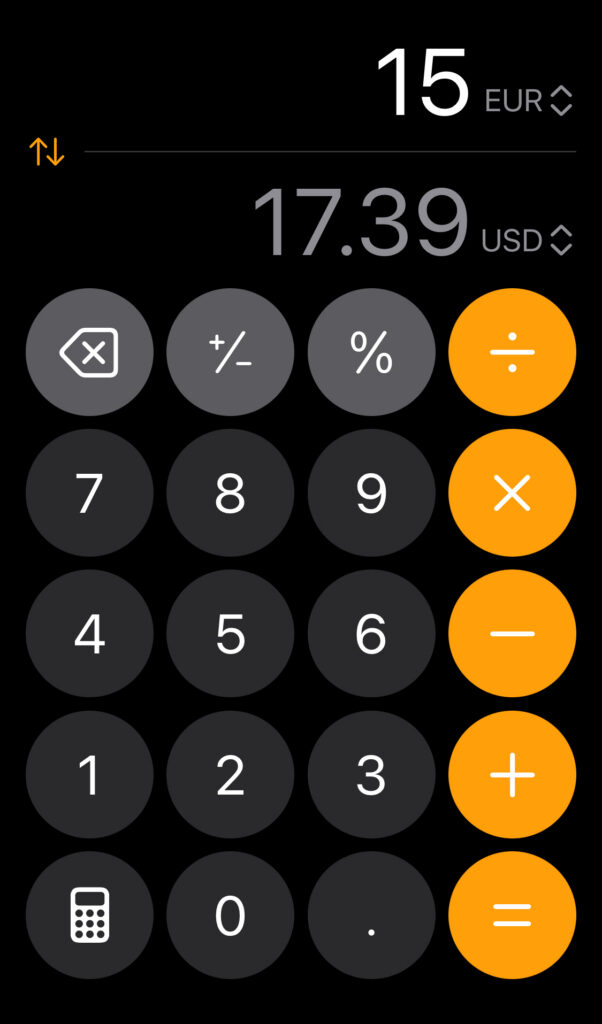
In most European countries, I prefer using a credit card (I’ll tell you why below). But you will want to have some cash on hand for tips, taxis, and rural areas. Get your cash at the airport (most expensive) or at a trusted ATM (less expensive). Whenever you’re exchanging money, pay attention to scams and regional safety. You’ll also need to pay a currency exchange fee whenever you get cash.
- Quick Tip: If you don’t have the currency feature on your iPhone, you can download a currency calculator app before your trip.
The best credit cards to use in Europe
In most European countries, using a credit card is my preferred money option. Travel credit cards waive any foreign exchange fees (which, on average, cost 10% of the transaction) and pay you in rewards for booking travel experiences. Plus, you get the added safety of using a credit card if your personal information is stolen.
To waive the foreign exchange fees and get *allll* the travel perks, you’ll need a travel-specific credit card. My favorites are the Chase Sapphire Preferred and the Capital One Venture X Card. These are such great options when you travel frequently, because they also give you rental car insurance, trip delay reimbursement, luggage insurance, and annual travel or hotel credits.
- Quick Tip: When you use your credit card in foreign countries, some systems will ask if you want to use USD or the local currency. Usually, the local currency is the much cheaper option with better exchange rates. Choose that one!
What safety concerns will you face in Europe?
Every European country is different, but most of them are quite safe (often safer than the United States). In big cities like Paris, Barcelona, London, and Rome, your biggest concern will be pickpockets. They usually work in pairs, with one person to distract you while the other roots through your bag. Pickpockets are common in highly touristy areas and on public transportation. If you’re on a train, you’ll want to keep an eye on your bags at all times and hold onto valuables. If you’re on a metro or in a busy tourist area, it’s best to keep your phone and wallet inside your bag.
The best way to avoid getting pickpocketed is to be prepared and aware. Choose crossbody bags with zips and buckles that are hard for people to access. Don’t be the person who’s scrolling through their phone right by the metro doors (it’s easy for a pickpocket to grab your phone and hop off the metro as the doors close).
- Quick Tip: I always recommend researching common local scams before you visit a new country. For example, someone in Spain may want you to sign a fake petition (which distracts you while they search your bag), while someone in France could offer you a free friendship bracelet (and then chase you down for payment). Scams tend to be similar in nature, but know before you go.
Tips for learning the language
Before you travel to Europe for the first time, people will tell you, “Everyone speaks English, so you won’t need to learn the language.” This is true in touristy areas, and it’s one of the many reasons Europe is popular for first-time travelers. But learning quick words and phrases will serve you in small towns, and it’s a good way to respect and appreciate the local culture. Also, the places that don’t have English signs and menus readily available are typically more authentic. You’ll want to venture outside of the English-speaking world for a more legitimate experience.
- Quick Tip: I’m obsessed with the new camera feature on Google Translate. Just click on the camera button in the app and hover your phone over any menu or website to translate it.
What you need to know about passports and visas
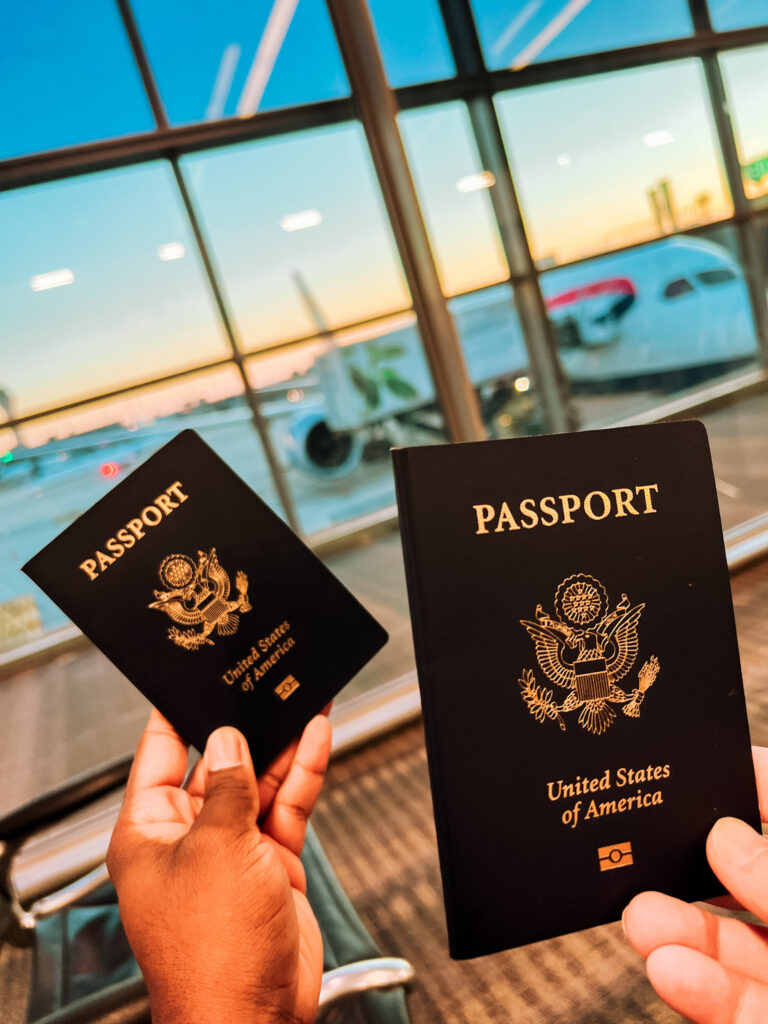
To travel to any country, you’ll need a passport. It takes up to six weeks to get a passport, but I recommend giving yourself even more of a time buffer. If you’re in a time crunch, you can also expedite your passport. If you’ve had a passport for a few years, it’s best practice to check the expiration date before you book a flight.
As for travel visas, the European Union (EU) is easy to navigate. You can visit anywhere in the Schengen Area for 90 days on a tourist visa, which you’ll get when you enter the country. Regions outside of that area (like the United Kingdom) may need additional permission.
The EU visa system is set to change in late 2026 with the introduction of the EITAS. This is a new authorization you’ll need to complete to enter the EU in the future. You’ll fill out an application and pay for it before you travel. For updates on the EITAS system, check here.
- Quick Tip: Going through customs is usually worse when you re-enter the United States. Download the Mobile Passport Control app and input your travel data upon arrival to save time in line.
Apps and maps you need to download
In larger cities, you’ll get around using the train, metro, and bus. It’s helpful to know how frequently buses run, if the metro closes at night, and what lines you’ll need to take to arrive at your hotel. Trust me, even if you have transportation planned, you want to study maps in advance when you’re well-rested and safely at home. I also recommend downloading local maps and official transit apps, so you have them immediately on arrival.
- Quick Tip: One of my favorite travel hacks ever (courtesy of an expat friend) is to save all your restaurants and tourist stops in the Google Maps app. When you’re wandering the side streets of Barcelona and want a bite to eat, just pull out your map and find the closest place you saved. Or if you have some extra time to kill after visiting a museum, pull out your map to see which historic sites are nearby.

Using the restroom in Europe
In many European cities, you’ll need to pay to use the restroom. It costs a euro or less, but can be a bit of a culture shock for Americans who are used to peeing for free. Keep change on hand for bathroom trips, and use the bathroom at your hotel and at restaurants to keep costs lower.
There are a few countries, like Turkey or Greece, that have fragile plumbing systems, so you can’t actually flush toilet paper. You’ll need to toss it in the trash can instead. You might also find different flushing handles or buttons than you’re used to, but those are easy to figure out. I’ve found the European restrooms in tourist areas to be a lot more sophisticated and clean than typical American bathrooms.
- Quick Tip: Be the coolest person in your friend group and download a toilet finder app. In case of emergencies, this will point you to the nearest restroom.
Getting off an international flight
You’ll probably feel the most vulnerable when you first land in a foreign country and have to navigate between the airport and your hotel. One of my friends and I have an inside joke about how we can never make it out of an airport in less than two hours (to be fair, there was a lockdown in Charles de Gaulle the first time we traveled together).
You’ll be navigating public transportation, dragging luggage through cobblestone streets, and trying to figure out if your taxi driver is trying to scam you — all in a haze of jet lag, hunger, and culture shock. We’ve found it’s easiest to book an Uber or similar service from the airport to our hotel, rather than jumping immediately into public transportation. It’s a little pricier, but it takes half the time and removes a lot of the immediate stress on arrival. Sometimes airports are close to large cities and easy to navigate, and other times you’ll need a train, a bus, and a few miles of walking to get to the city center. It’s best to figure all that out before you land.
- Quick Tip: You absolutely should have high expectations for your international trip, but not for the first arrival day. Assume you will feel awful for about 24 hours before the real trip begins.
Steal My European Packing List
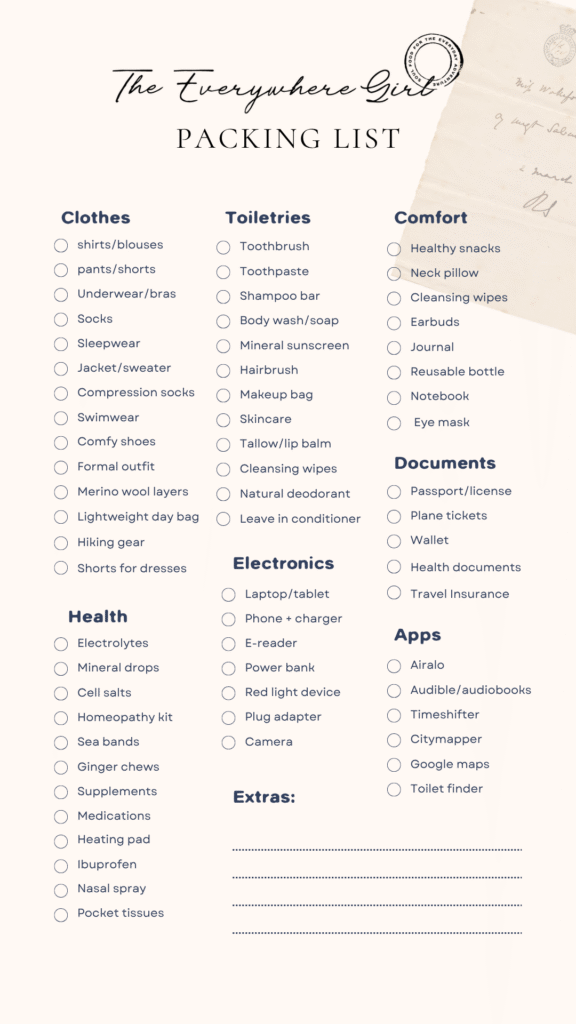
While it’s tempting to bring a full wardrobe and hair tools for once-in-a-lifetime Eiffel Tower photo opps, the reality of packing for Europe is less glamorous. Smooth pavement and apartment elevators are rare, which means you’ll be dragging bags over cobblestone and lifting them through tight staircases. Trust me, pack light.
HERE’S WHAT’S ON MY EUROPEAN PACKING LIST
Letters to explore
Little comforts for your busy life