ME
NU

Word from Home
I'm Stephanie
You’ve arrived! Welcome to The Everywhere Girl, a slow living blog that helps you cultivate a sense of home in any space or season. I’m Stephanie, resident writer, chronic wanderer, and hospitality enthusiast. I’m so glad you’re part of the community.

My love letter to home. These notes come to you from across the continent, across the globe, and across the hall.
Steeped in faith, literature, and self-discovery, they’re my way of finding home within myself, and with all of you.
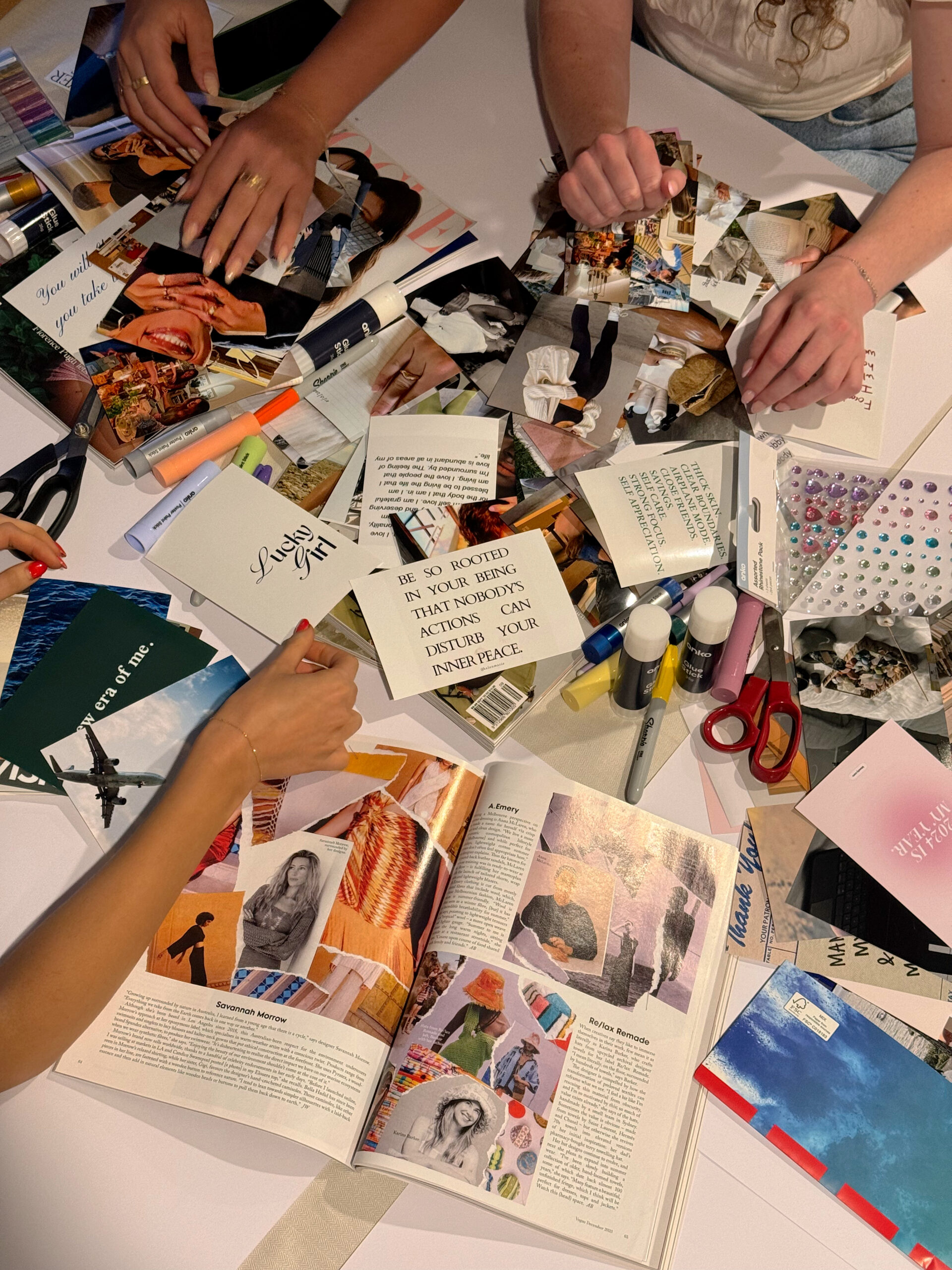

One of the gifts of being a creative human is the endless supply of ideas. We’re never short of novel WIPs, business ventures, and content ideas. But if our goal is to gain creative traction, we have to learn to sort and build these ideas carefully — so we finish what really matters to us. Here’s how to do that.
Chapters
- The (Somewhat) Complete Guide to Banishing Novelty Bias and Organizing the Creative Brain
- Before You Start a New Project, Ask Yourself These Qs
- Three Stages of Executing an Idea
- Building Intentional Rest to Supercharge the Creative Brain
- No Creative Advice Is Better Than a Signature Process
- Learn the Skill of Creating in Any Space
- Stop Talking About Half-Baked Ideas
- Treat Creativity Like a Serious Relationship
- Build Self Awareness and Reframe Core Beliefs
- What We Consume Informs What We Create
Growing up creative is somewhat of a novelty. Your artwork gets passed around to relatives at holiday dinners like it’s part of the buffet. Strangers exclaim over you, “I can’t believe this comes so easily to you.” And without thinking, friends and family declare creativity as something that comes naturally — something that doesn’t need structure or coordinated effort to keep in place.
I’ve spent over ten years in the professional writing field, and I’m ready to go on record and declare this a disservice to the creative mind. All other fields are given structure. They learn the most efficient, effective, and intentional ways to apply their brain power to an end goal. Creatives are the most prone to wandering minds, squirrel brain, and new idea syndrome, yet we are the least equipped to banish it. We miss out on completing our novels, launching our businesses, or filming a cute Instagram series, all because someone decided that creatives are spontaneous, not dedicated.
So after years of managing my own novelty bias, I’ve created this guide to pick up where our creative education left off. This is the process I use to sort new ideas and decide if they are good enough to commit to. It’s how I finish things that matter, table projects that aren’t right for my current schedule, and make actual traction in my sacred creative spaces. And it’s a creative process I teach my clients, too.
The (Somewhat) Complete Guide to Banishing Novelty Bias and Organizing the Creative Brain
In no specific order, here’s everything that goes through my head before I commit to a new creative project. It doesn’t have a 100% success rate (we all need a dose of squirrel brain now and then), but it helps me stay comfortable finishing WIPs, working from my heart, and making traction in creative business.
Before Starting a New Project, Ask These Qs
Starting a new project gives us a dopamine hit. So we’re always motivated to publish the first blog, write the first chapter, or outline an oil painting. But the reality of the creative life is, we’ll always have more ideas than we can finish. So instead of walking around with a bunch of dopamine-hit business ideas and half-finished manuscripts, let’s ask the right questions to decide which ideas are worth undying dedication.
- Does this idea get me closer to where I want to be in 5 years?
- Does this grow my skills as a creative? How?
- Can I see myself committing to this for five years or more?
- Do I have all the tools I need to accomplish this? If not, what do I need, and how accessible is it?
- How many hours per week will this project take? Am I willing to commit that much?
- Do I have other ideas that are more aligned with my current life path?
- Is this idea aligned with my current spiritual, emotional, and mental state? If I give myself more time and experience before I begin, could I create something better?
Three Stages of Executing an Idea
I like to build my own creative system by breaking ideas into three stages: Launch, sustain, and live-in.
- Launch: File anything here that needs hours of dedicated effort, education, and intentional time management. Things like writing a book, starting a business, building an asset (like a blog or podcast), or pivoting a current career.
- Sustain: This is where ideas get filed in the half-baked category. The massive effort of launch is over, but we’re not quite doing the project with our eyes shut. Intention is still needed to keep these projects moving toward an end goal.
- Lived In: Ideas that need everyday maintenance go here. It’s the creative admin work. Sending a weekly email, signing a new business client, going to a creative writing conference, posting on social media, or learning a new crochet stitch. These tasks are almost second nature, but they are the backbone of projects that really matter.
It helps me to file away projects into these stages so it’s easy to spot overwhelm or gaps in the creative system. Since project launches are so time-consuming, I know I only have the bandwidth for one at a time. That forces me to be more selective about ideas, so I pick what actually matters and give myself space to finish it.
Building Intentional Rest to Supercharge the Creative Brain
We all know the creative mind works best when we’re doing the dishes, gardening, taking a shower, or driving twenty minutes down the road. Sometimes, I stare bleary-eyed at a sentence for an hour, just for the right words to come when I take a bathroom break.
There’s real science behind why that works, because the creative brain functions in the limbic system. It leans into the subconscious mind, intuitive decisions, and gut feelings. It also activates when the brain is in the Default Mode Network (DMN), when we’re daydreaming or staring out a window instead of forcing deep focus. Someone go tell the tech bros about this, please.
I know “the grind” is tempting, and it’s still considered the only way to get anything done in America. But we have to stop thinking about ourselves as robots that create the same quality work without breaks or nourishment. Especially for creatives, we perform better when there’s time to daydream or pick up meaningless hobbies.
That also means that we can’t force our way through finishing a book or filming an Instagram series. We can’t decide that we’ll just “make the time” if there’s no buffer for rest and daydreaming. The intentional rest has to be the rebellion that comes first, with meaningful creative work balanced to fit into our creative life.
No Creative Advice Is Better Than a Signature Process
I’ll be the first to tell you all about my favorite writing books. The Creative Act, The Artist’s Way, Bird by Bird — they’re all influential in my creative process. But none of the advice or creative hacks in those books is better than my signature style. Since every brain is different, no one can tell us how to perform best creatively — we have to make it our mission to find that out for ourselves.
The goal is to learn the rules so we can break them. Embrace advice, but trust our own patterns more. Copying someone else’s process is just a recipe for inauthenticity or burnout. And learning to adapt and align with our own brain’s needs is the best way to get stuff done, even when our schedules are limited.
Learn the Skill of Creating in Any Space
The internet is full of perfect writing desks and aesthetic routines meant to nurture creativity. In my early novel-writing days, I enjoyed these spaces as much as anyone else. My friend and I would make our own care packages before Novel November, filling them with teas, candles, and cute decor for our writing spaces.
I still enjoy a writing session by candlelight. But as I’ve matured (and worked full-time hours from foreign countries), I’ve realized the real skill in accessing the creative brain from anywhere. Re-creating the same environment for every creative venture limits our potential.
Lighting candles, listening to a playlist, making tea, and snacking on charcuterie boards train our brains to only create under these circumstances. That means we miss out on creative bursts that come on vacation, or when we can’t jot down new ideas in noisy spaces.
All of us will have seasons where routine is a luxury we can’t afford, too. Maybe you’re writing from coffee shops during a move, watching your toddler’s TV shows, or going on frequent business trips. It’s a great loss to quit creating during these seasons because we need a self-cultivated environment.
Stop Talking About Half-Baked Ideas
Talking about projects with friends and family also releases dopamine in the brain. Things get a little tricky here, since we get a brain reward without actually doing the work. I know different creatives have different rules around when and how they talk about their work, but this is something I recommend for training the brain well, especially if you frequently leave projects unfinished and want to lock in. Let’s decide not to talk about creative work until we’re already committed.
Treat Creativity Like a Serious Relationship
From here on out, we’re making vows with our projects. For better, for worse, for richer, for poorer, once we commit to something, it’s our mission to make it happen. We have to train our brains to start projects and finish them. This makes every future project easier to complete, and forces us to be picky about the ones we choose.
Build Self-Awareness and Reframe Core Beliefs
It’s common to hesitate on things we don’t feel well-equipped to manage. The brain and the body fear the unknown — which makes us more likely to commit to easy projects, rather than the ones we actually care about. It takes a bit of self-awareness to pinpoint which feelings and emotions drive our decisions — and it takes even more self-awareness to override them.
One of my favorite ways to do this is by reframing “I can’t” and “I don’t know how” statements. “I don’t know how to start a YouTube channel” is a cop-out statement that stops ideas before they’ve even started. Instead, say, “I haven’t learned how to start a YouTube channel yet.”
What We Consume Informs What We Create
I’ve had a few moments in my life where I’ve felt creatively dry. I can’t think of my typical novel ideas, or I don’t feel like I have much brain space for creating. I’ve started to recognize this as a shift in what my brain wants to create, not necessarily a lack of ideas. We do go through phases in our creativity, after all. The best way I’ve learned to clock these shifts is by looking at what I consume. If I’ve started poring over literary narratives and memoirs, maybe my brain is waiting for me with ideas in that space. If I’ve started appreciating storytelling in film, maybe it’s time to get out my camera. I just needed to open my creative mind to a new space and look at what I consumed to inform what I created.
Letters to explore
Little comforts for your busy life